
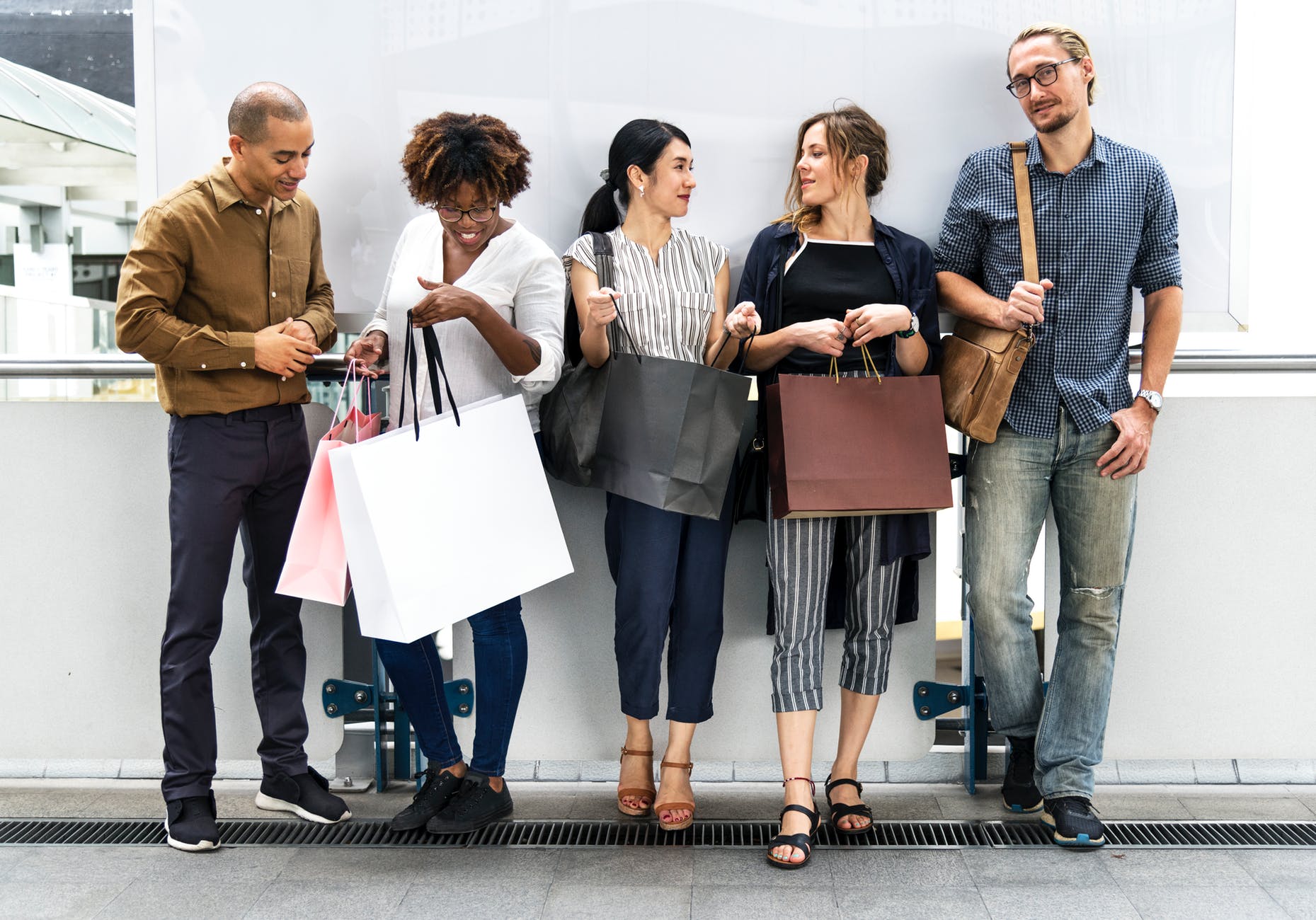
Gender roles have rarely been so clearly delineated as is the case in shopping behavior outcomes and expectations. It isn’t a stretch to say that societies around the world are obsessed with gender constructs. Gender roles are created and expected behaviors, attributes and choices are assigned to each sex. It touches on every facet of our lives: employment, relationships whether personal or professional and shopping and buying decisions. Goods and services are positioned, marketed and advertised with this in mind. Even children are not exempt from these gender-assigned roles in advertising (a topic for another day).
In shopping behavior, we’ve often heard the phrases “shop like a man” or “shop like a woman”. While the feminists among us might find the phrases rather abhorrent, there is some truth to the assertion that men and women display quite different shopping behaviors. More women now have even higher purchasing power and are in charge of purchasing decisions for themselves and their families. We tend to think about the benefits of one product over the other. So we shop around, taking our time to examine each product, try it out, feel it, poke and prod at it, abandon it. Go on to the next shop, pick out a similar or identical product, poke and prod at it some more…(memories of weekend shopping in the market with my mum. Aaarrrgghh!!!!) Men, on the other hand, tend to approach shopping like a mission: know what I want, go in, get it, get out.
Psychological perspectives indicate that emotions, perspectives and motives affect how buying decisions are made and consequently how shopping behavior is affected. How do emotions, guided by our different hormonal constructs, influence our buying behavior? Research show that 2 systems guide our decision making: Implicit ‘hot’ emotional process based on feelings, or explicit ‘cool’ and deliberative consideration of long-term consequences. Men tend to bring a more deliberate, utilitarian approach while women typically adopt a more hedonic motive, relating to more intrinsic attributes.
Implicit biases are the attitudes or stereotypes that unconsciously affect our decisions and actions. Do implicit biases in gender guide our decision making? It is certainly the case in how products and services are advertised to the different genders. For women, it’s more experiential. I’ve been in a dress shop that was done up to look like a nice, cozy boudoir. Complete with soft armchairs to sink into, the requisite silver tea-set and plump footstools to rest your dainty feet! Of course, the soft scent of lilacs permeated the air. While I gazed around in delight, anticipating an enjoyable 3 (!!!) hours of shopping, I couldn’t help noticing the trapped look in my boyfriend’s eyes. I’d corralled the poor guy into going shopping with me. A fate worse than death, to a whole lot of men!
References:
Mehreen Siddiqua, Men buy Women shop: Gender-based consumer behavior insights for marketers (2016) https://blog.logodesignguru.com/gender-based-consumer-behavior
Marcia Maurer Herter, Cristiane Pizzutti dos Santos, Diego Costa Pinto (2014) “Man I shop like a woman!” The effects of gender and emotions on consumer shopping behavior outcomes, International Journal of Retail and Distribution Management, Vol 42 Issue 9, pp780 – 804
 hammersandflowers
I enjoyed this blog post. It would be interesting to see if there are perceptual differences in how men navigate a store verses how women navigate and shop. I am looking forward to future posts on this subject matter. Perhaps gender barriers to product/ shopping experience would make for a good investigation. Regards !
LikeLike
Bears thinking about. Thanks!
LikeLike
A big fan of the topic you’ve chosen to blog about! And you’ve done so really well. Also, it turns out sex differences exist not only in shopping but also in consumer complaints, which I found really interesting. Here’s the paper if you’d like to have a look! “Man, I complain like a woman!” 🙂 http://jcsdcb.com/index.php/JCSDCB/article/view/154
LikeLike
Interesting! Many thanks!
LikeLike