
“Girls cannot be pirates!” His imperious little voice carried clear across the toys section of the shop to where I stood looking through books for my son.
“Mum says I can be anything I want!” piped up a little girl’s voice. Curious, I walked 2 aisles across and peeked out. There they stood: 3 children and their exasperated and obviously overwhelmed Dad. A boy stood looking at a younger girl of about 6 years old, with all the disdain his 8 year old self could muster. I recognized him as my son’s classmate. The box the little girl had in her defiant grip had a pirate ship picture on it. Playmobil, I think.
“Mum says girls can be pirates too, and she says I can have it!” (Yay for Mum!!)
“Dad tell her!” protested the misogynist-in-the-making. “There are no girl pirates on TV.” Dad looked like he was about to bolt and the little one clutched his chinos with her thumb firmly in her mouth. I wondered where Mum was.
I’d seen similar scenes play out in so many homes, schools and playgrounds. Being a mum of 2 boys, I’m thankfully spared such controversy. But as I looked around the store, I thought how much children were actually conditioned to adopt these stereotypes, by words and images on television, shop displays, books and popular culture. The in-store displays for toys, games and even books were clearly delineated along gender lines. Ships, cars, swords for boys and kitchen sets, dolls with dress-up outfits and sparkly stuff for girls. Studies have revealed that media portrayals of toys and children’s products help to shape the gender socialization of young children. (1) Gender-specific toys are the norm, with the requisite gendered colours and children nudged into stereotypical choices. Choices which could go beyond merely purchasing of toys to shaping their conceptions of gender roles as adults: what skills they learn, what limitations they may place on themselves and others.
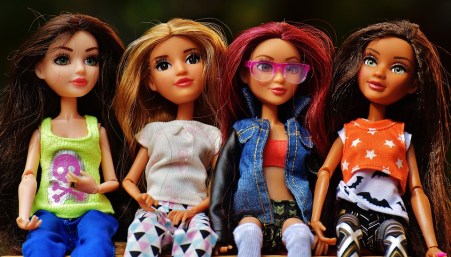
Market segmentation theory encourages dividing consumers into smaller group. The advantage to businesses is that segmenting the market into narrower demographic groups, could help sell more versions of the same toy.
UK campaign group, Let Toys be Toys, carried out a study which revealed that adverts of cars, action figures, construction sets and toy weapons featured boys. The boys were shown as aggressive and assertive and the language used connoted power and control. Girls, on the other hand, appeared in adverts for dolls, glamour and grooming toys, focusing on nurturing and relationships. The group believes that TV adverts give children “narrow and limiting ideas about how boys and girls behave, and how they’re expected to play.” Ideas that will carry into adulthood. Campaigner Jess Day further said, “Kids deserve better. We’re calling on toy companies to act more responsibly, and use their creativity and innovation to market toys without promoting harmful and limiting stereotypes.” (2)

In an attempt to protect children from the perceived effects of long-held gender stereotypes in advertising, a report, ‘Depictions, Perceptions and Harm – A report on gender stereotypes in advertising‘ was released by the Advertising Standards Authority last July, highlighting the prevalence of ‘contemporary sexism’ in today’s advertisements, and its plan for combatting this in the future. (3)
But can the ASA do this without stifling creativity? Is ‘untargeted’ advertising even possible? Or are we marketing to stereotypes rather than people?
- Spinner, L., Cameron, L., Calogero, R., Sex Roles (2018) 79: 314. https://doi.org/10.1007/s1199-017-0883-3
- https://www.independent.co.uk/life-style/health-and-families/health-news/most-toy-adverts-are-sexist-and-show-narrow-and-limiting-gender-stereotypes-study-warns-a6776746.html
- file:///C:/Users/User/AppData/Local/Temp/Gender%20Stereotyping%20Summary%20Report.pdf
 hammersandflowers
I am so happy you chose this topic! I enjoyed reading your blog and you explored the question about market segmentation or reinforcing stereotypes so well. A while ago, I had read a news article about two women who weren’t happy with the bedtime story books in the market, so they decided to write a book called ”Good Night Stories for Rebel Girls”. The book was a huge success. They wrote real-life stories about 100 incredible women. The authors identified the gap in the market, challenged the existing norms and created something that promotes good values for kids. If you want to read more about them, here’s the link-http://www.thejakartapost.com/life/2018/10/13/how-two-rebel-girls-shook-up-publishing.html
LikeLike
Great. I’ll take a look. Thanks
LikeLike
This is such a great blog on such an interesting topic. I worked in a charity shop one summer and was told to organise the children’s toys by gender and place the boys ones on a blue shelf an the girls ones on a pink shelf. It felt so wrong to do and to be honest most of them I put on a neutral shelf I made. The issue of many companies targeting the audience that uses their products. Not just with toys but adult products as well. Until social ideas change many advertising companies will still target certain genders as that is what sells but then it won’t change with them doing this. It’s a vicious cycle. You might like this article https://onlinelibrary.wiley.com/doi/pdf/10.1111/j.1559-1816.2010.00639.x
It will be very interesting to see what happens in the future.
Thank you for a great read
LikeLike
Wow this is a very valid point to bring to light. As we are conditioned through the years it starts from a very young age scientists believe that it already starts when we are still in our mother’s wombs (see Brandwashed) which is a very scary thought as it implies you are born with preconceived ideas before you can comprehend what they are. The notion of market segmentation is based on stereotypes to an extent as it is a way in which marketers put people with similar traits and characteristics into certain groups so there is some truth to stereotypes but that being said it doesn’t define the masses.
LikeLike