How You Say it Matters – Message Framing in Advertising

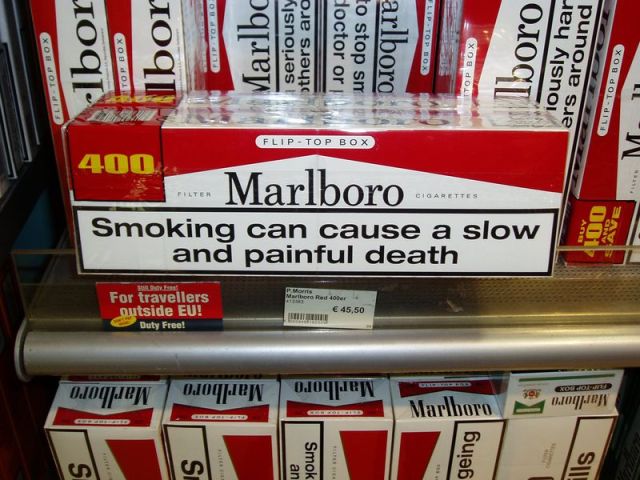
marlboro_warning_death

I picked up a packet of cigarettes and saw the bold message that almost obliterated the brand name: ‘SMOKING KILLS’. And ‘SMOKING SERIOUSLY HARMS YOU AND OTHERS AROUND YOU’. As usual, whenever I see these packets, I smile cynically. “Way to go to put the world off smoking,” I thought to myself. I wondered why it was necessary to literally hit us over our collective heads with the bold signboard of a message. But that was the whole point.

We learned about message framing in Consumer Psych class. The way a message is presented has different interpretations and elicits different reactions in listeners. Used in advertising, it is calculated to get the desired response from consumers. Advantage to be gained when a consumer chooses a particular product or service is positive message framing. When the benefits that stand to be lost is emphasized, it is negative. Language is dynamic, changing and open to different interpretation as presented.

Kahneman and Tversky’s 1981 experiment illustrates the positive framing bias. Participants were asked to choose between two options for the treatment of a hypothetical disease in two ways, one emphasizing the positive outcomes and one the negative.

FRAMING TREATMENT A TREATMENT B
Positive “Saves 200 lives” “A 33% chance of saving all 600 people, 66% possibility of saving no one.”
Negative “400 people will die” “A 33% chance that no people will die, 66% probability that all 600 will die.”


The results were remarkable. Where the framing was positive, 72% of the subjects chose Treatment A. But under the negative conditions, only 22% chose Treatment A.

So, back to the cigarette message. To curb the effects of smoking, tobacco manufacturers are mandated to brand every cigarette packet produced with a clear message that smoking kills. Crafting health messages have been tricky, requiring effectively straddling the line between passing the message across about real risks involved in unhealthy choices, and plain fear mongering. Crafting a positive message that would motivate people to change their behavior and make healthy choices, is what advertisers need to do. The findings in a study conducted by the Journal of Health Communication, suggested that wording that focuses on immediate advantages of quitting smoking, was more effective to nudge smokers towards quitting. The study suggested that smokers found these negative smoking messages ineffective and had no real meaning in the short term. Participants who were exposed to positive messages that showed gains associated with quitting, displayed a stronger intention to quit in comp to those exposed to loss-framed messages.
loreal

One of my favourite taglines ever, is L’Oreal’s ‘Because You’re worth it’. It is positive and resonates with, I believe, every woman. It frames a woman’s desire to access the best skincare she can afford – just because she’s worth it. It also effectively addresses self-esteem issues common with many women.

As consumers, we are listening. But no one wants to be scared into making the right choices.

Merry Christmas to you all! (Now, this message couldn’t be said any better!)


REFERENCES

Tversky, A. and Kahneman, D.  (1981) The Framing of Decisions and the Psychology of Choice, https://www.uzh.ch/cmsssl/suz/dam/jcr:ffffffff-fad3-547b-ffff-ffffe54d58af/10.18_kahneman_tversky_81.pdf  Accessed on 21 December, 2018

https://en.wikipedia.org/wiki/Framing_effect_(psychology) Accessed on 21 December, 2018

Saar Mollen, Susanne Engelen, Loes T. E. Kessels & Bas van den Putte (2017) Short and Sweet: The Persuasive Effects of Message Framing and Temporal Context in Antismoking Warning Labels, Journal of Health Communication, 22:1, 20-28, DOI: 10.1080/10810730.2016.1247484

Kobe Ben Itamar (2015) Pagewiz ‘This Is How The Framing Effect Can Help Your Conversion Rate’ https://www.pagewiz.com/blog/online-marketing/framing-effect  Accessed on 21 December, 2018
Brands and Psychology


brand building

It has been said that brands are a psychological concept.

Marketers and advertisers understand that influencing perceptions of the products to build a brand, involves understanding the psychology of the target. Studying and understanding psychology shows that our individualities and distinct identities help to define what brands we gravitate to. The truth is that emotions are at the heart of our consumer choices. In deciding to buy a pair of shoes, we mostly think with our hearts and not with our feet! The success of a brand is hugely dependent on its ability to make a consumer feel good, or better; to want more of those feelings and to identify with the brand that causes them. Therefore, it must be acknowledged that human psychology is the thought behind brand conceptualization and consequently, the core of brand building. Developing a mental connection with the consumers is key to building a strong and successful brand.

starbucks

The brand relies on the consumer to bring the conceptual thought to birth through acceptance, choice, perceptual and emotional buy in. Marketers therefore, rely on psychological concepts to understand the behavior behind consumer brand loyalty and to apply them to such a degree as to create a strong bond and attraction that draws and retains consumer attention, sales and loyalty. This demand-oriented perspective on the brand helps to keep the focus on the target – the consumer – without whom, there would be no brand. Therefore, when the question is asked, “Who owns the brand?” one can only ponder the following: who gives the brand life? Who sustains it? It is consumers who build brands.

A brand’s identity is built on consumer interaction. Successful brands recognize this and listen to their consumers. Due to an increasingly vibrant and dynamic social media, marketers have direct access to their consumers like never before. Understanding the human and behavioral psychology of this group is fundamental to the growth, sustenance and success of the brand.

The Theory of Reciprocity

The theory of reciprocity is hinged on the premise of give and take. In other words, mutual benefit. It speaks to the human need to give back when something nice is received. This is central to the concept of brand building and loyalty, facilitating stronger, lasting relationships with consumers.

Dr Robert B. Caldini, in his book, Influence: The Psychology of Persuasion (2007) mentions ‘Weapons of Influence’, methods regularly deployed by marketers to build brand relationships with consumers.

Free gifts with purchases and referrals are great ways marketers use reciprocity to build brand loyalty and emotional connection with consumers. The concept of BOGOF (buy one get one free) has become popular in marketing.

woman wearing sunglasses


The Endowment Effect

The emotional connect between a consumer and a brand leads to a sense of ownership. More value is assigned to the brand as a result of this. In an experiment conducted by  Richard Thaler, Daniel Kahneman, and Jack Knetsch at Cornell University in 1990, a group of students were given  Cornell University coffee cups, which retailed at $6.00. A second group of students were given nothing.

The 2 groups of students were then asked to set prices for selling and prices they were willing to buy at.  The students who had mugs were “unwilling to sell for less than $5.25,” while the group without mugs were “unwilling to pay more than $2.25-$2.75.”

In a campaign by Amazon, the company sent out an email to its Prime members asking them to watch a series of pilots in order to pick the next Amazon Original Series. Even though no prizes were given, the participants are sure to feel a sense of ownership and belonging, having been a part of the process. Thereby further strengthening their emotional connection to the brand.

An understanding of human psychology and behavior is important in building and sustaining brands. The knowledge of psychology is particularly useful in assessing the motivations behind human behavior and consumer choice.

“… Love is based on inspiration. We are inspired by brands for the same reason we’re inspired by the people we love, because they have principles and treat me like a human being who is intelligent and has feelings. They show empathy and bring joy to my life.”

Juan Carlos Rodriguez, Creative Director, Badillo Nazca Saatchi & Saatchi

brand


References

Caldini, R.B. (2007) Influence: The Psychology of Persuasion. New York. Harper Collins

Big Think (2012)Rethinking the Endowment Effect: How Ownership Affects Our Valuations  https://bigthink.com/insights-of-genius/rethinking-the-endowment-effect-how-ownership-effects-our-valuations  Accessed on 21 December 2018

Liz Froment  (2015) Creating Ownership with the Endowment Effect  Zembula https://www.zembula.com/blog/creating-ownership-endowment-effect/ Accessed on 21 December, 2018

THE ‘GENDERIZATION’ OF BRANDS

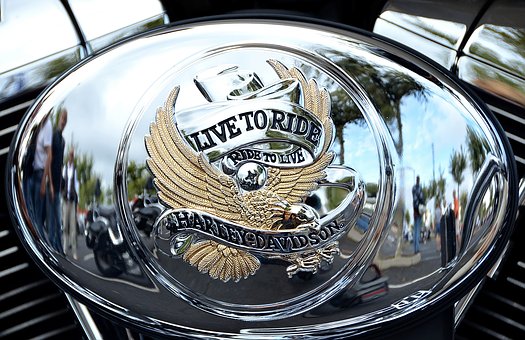
harley-davidson-1864229__340

As consumers, we form deep emotional connections with our favourite brands. I’ve used Dove beauty bars since I was 16 and I’ve gone through all the colours, fragrances and variations. My latest romance is with the Exfoliating Argan Oil Beauty Cream Soap Bar. Luxurious, creamy and smells like heaven!! In my eyes, Dove can do no wrong. That is my emotional connection with the brand. Considering this emotional relationship, it is not surprising when brands are perceived by consumers as either masculine and feminine (or gender neutral), and allocated similar attributes. (1) The brands have taken note. Marketing, advertising and brand positioning deliberately contribute to this, in order to appeal to a targeted segment. A brand becomes like a person – male or female.

Brand personality is when human attributes are assigned to a brand. Adjectives such as funny, sophisticated, wholesome, endearing, rugged, masculine, feminine are assigned. Marketers  and advertisers work to create an identity for these brands that will resonate with their target consumers. These adjectives naturally devolve into masculine and feminine traits, hence the ‘genderization’ of brands. Harley Davidson, for instance, has always represented ‘rebel’. The associations with James Dean come to mind. Patently non-conformist, the logo, the colours and the leather have lent a definite tough masculinity to the brand.

harley man

What is the impact of assigning these gendered attributes to brands and what effect does it have on their brand equity? It has been argued that brands that have, or nurture, a clear affinity with a certain gender (gender clarity), enjoy higher brand equity. (2) Brand equity can also be influenced by an affinity with the opposite sex. Dr. Theo Lieven’s 2014 study also showed that the gender of the brand could be different from the gender of the target segment, at least for a particular purpose. A good example is when Harley Davidson, in order to boost flagging sales, attempted to woo the female market by creating opportunities for females to gain bike riding skills by hosting garage parties and biking clubs for women and creating lighter, sleeker motorcycles that appeal to women. (3) Rather than reduce the masculinity of the brand, it incorporated the new strategy to build a bigger stronger brand by attracting women as well. Women are currently its fastest growing market, and Harley sells 7 times more than the competition, to this demographic.

Harley female

Gender has become pretty fluid, these days. Biologically, we remain the same sex (of course!) However, under certain circumstances and environments, our different attributes and characteristics may move up and down the gender scale. A man behaves differently with different people under different circumstances. A macho guy in a club with his mates, turns into a big teddy bear with his girlfriend in a romantic hideaway. Is it not then more important to understand the gender of brands and how and when to apply them to resonate with the consumer, rather than merely linking them to the sex of the target segment?

I once bought Tom Ford’s Black Orchid for my husband and we ended up sharing it, until I went and bought one for myself. It had a musky, spicy fragrance that appealed to me. That led to an argument of whether it is masculine, feminine or unisex. I believe it is a men’s perfume. The packaging is totally masculine. Or perhaps it was cleverly marketed to women, as it originally was, knowing its appeal to both sexes. But while being a total girly girl with a lifelong passion for Estee Lauder, I tried Vivienne Westwood’s Boudoir and got hooked on spicy, musky scents.

Advertisers would do well to understand the ways different sexes could use their brands to express different gender attributes. And should be prepared to appeal to all sides of the consumer. No one is wholly masculine or feminine.


References:

  1. Alreck, P.L., Settle, R.B., & Belch, M.A. (1982) “Who responds to ‘gendered’ ads, and how? Masculine brands versus feminine brands” Journal of Advertising Research, 22(2), 25-32
  2. Lieven, T., Grohmann, B., Herrmann, A., Landwehr, J.R., van Tilburg, M. The Effect of Brand Gender on Brand Equity” Psychology & Marketing, Vol 31, Issue 5, May 2014, pp 371-385 https://onlinelibrary.wiley.com/doi/full/10.1002/mar.20701
  3. Interbrand, “Examining Gender Roles in the Context of Brand” n.d. accessed 23 November 2018, https://www.interbrand.com/views/examining-gender-roles-in-the-context-of-brand/


Subliminal Messages in Advertising


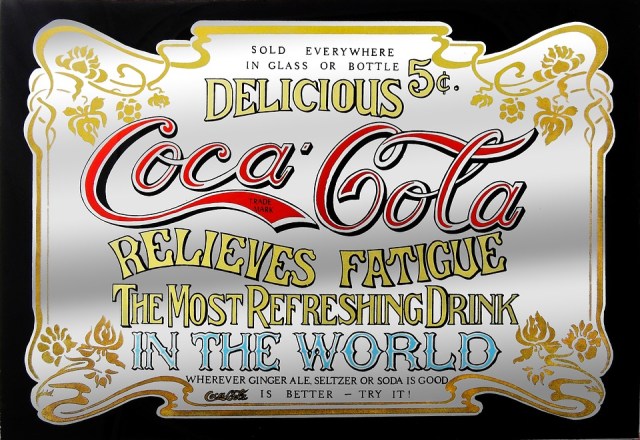
cocacola

The main aim of advertising is to achieve a specific communication task with the targeted audience. To inform, persuade and remind. (1) Advertisers accomplish this in different kinds of ways. Some brilliant, heartwarming and wholesome. Some a little (or a lot!) less palatable.

Sometimes advertisers want to pass across a message in a subtle way. They use subliminal messages and stimuli in form of words, shapes or colors designed to pass below the normal threshold of perception. It could be a fleeting, split second image or one that is hidden in plain view and perceived subconsciously or at a second, closer glance. Ultimately, its purpose is to enable the consumer make the desired association between the product or brand and a particular meaning.

Movies sometimes make these associations. Disney is particularly known for its controversial, alleged use of subliminal images in some its movies. The most well-known is from The Lion King, where the word “SEX “ is very briefly created in a cloud of dust for a split milli-second.

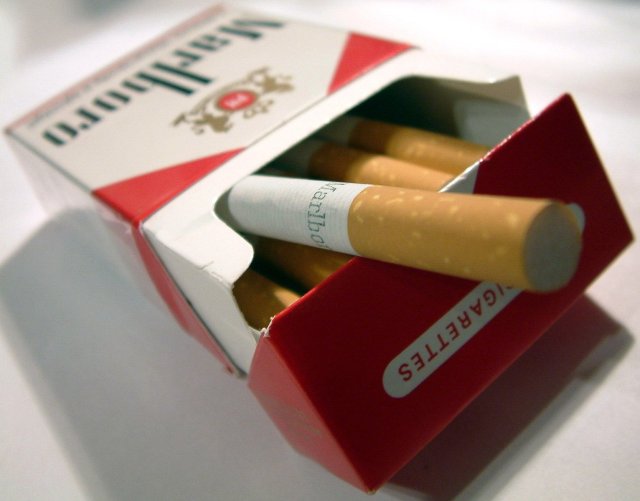
Brands sometimes use subliminal images to circumvent bans or restrictions placed on the advertising of their products. The ban on tobacco advertising resulted in Marlboro coming up with a clever way of getting around it. Sponsors of  Ferrari’s Formula One team, they simulated a Marlboro packet by painting a bar code on the side of a red Ferrari. With the colour matching Marlboro’s brand colors, the shape and look of the barcode in comparison with the lower half of the Marlboro cigarette packet,  the association was inevitable.

marlboro

Some advertisers claim the images are happy (and convenient) coincidences, while some admit a deliberate and clever creativity. Some also allege sabotage. In 1999 Disney recalled home video versions of their 1977 animated feature, The Rescuers, due to an “objectionable background image” contained in one of the scenes: as the rodent heroes fly through the city, an image of a topless woman can be clearly seen in the window of a building in the background. Disney claimed sabotage and insisted the images were inserted during the post-production process by unknown hands. Skeptics wondered why Disney chose that time to make the recall and bring it to public notice, over twenty years after the fact. Unlike previous rumours about the titillating images in some of their recent animated features, The Rescuers was not well known and the images only appeared in the home video versions. (2) Disney seemed to be creating the controversy themselves, leading to suggestions that it was an attempt to boost the sales of the low-selling video.

Researchers claim that subliminal advertising really does work, asserting that people subconsciously respond to brief, flashed images or messages, which changes their thinking. They discovered that this was particularly effective with negative messages. (3)

But one does wonder: are stimuli that are too brief to be noticed consciously by the consumer, effective in getting a person to go shopping for that product? Or could the advertisers just be creating controversy to draw attention and get people talking more about their brand? Some people would say, it comes down to the same thing!


REFERENCES

  1. Colley, R. H., Defining Advertising Goals for Measured Advertising Results, New York: Association of National Advertisers, 1961
  2. ‘Did a Topless Woman Appear in Disney’s ‘The Rescuers’?’ https://www.snopes.com/fact-check/the-rescuers/ 
  3. ‘Subliminal advertising really does work, scientists claim’ https://www.telegraph.co.uk/news/science/science-news/6232801/Subliminal-advertising-really-does-work-claim-scientists.html


MUSIC IN ADVERTISING

fantasy-3761246_960_720

I have a strong and rather strange attachment to a particular song. ‘What a wonderful World’ by Louis Armstrong. I know it’s a nice sentimental piece. It should make everyone happy – except you’re Shrek before he met Fiona. But the feelings it evokes in me are particularly strong. I’m intensely happy, deeply contented and all seems right with my world. Everyone who is close to me knows my attachment to that song. A couple of years ago, I went into a store with a friend. I didn’t really feel like it. It had been a long day and I just wanted to get home and put my tired feet up. While she browsed and shopped, and I grudgingly looked around, What a Wonderful World started playing in the store. It took a short minute for my mood to change. I ended up leaving the store with a broad smile and several unbudgeted-for packages under my arm.

That evening, once more, I wondered about my reaction to that particular song. I have happy songs that make me pick up a brush, a comb, a pencil, and sing at the top of my voice to the adoring one-woman audience in the mirror! I have songs that make me melancholy, or just plain sad. We all do. But this one was different and I always wondered why. I thought about it longer, and then it came to me. My parents are music lovers and I grew up listening to all kinds of music. But every Saturday morning, my Dad played What a Wonderful World. Saturday mornings to me and my 3 brothers meant no school, big breakfast on trays in front of the telly, cartoons until mid-day and the prospect of an afternoon outing to goodness-knows-where, to look forward to, while my Dad sang along in the background. My little world was perfect: safe, secure and happy. To a little girl, I felt that very deeply and every time I heard the song, it evoked those feelings in me. I thought about my experience in the store and how hearing that song changed my mood and even got me spending.

Thinking about it now, I realize that it is a form of classical conditioning (also called respondent conditioning) and in turn, it got me considering the role and effect music in advertising has on our choice behavior. Studying consumer psychology really does make you relate even the seemingly mundane, to buying choices and behaviors. Classical conditioning suggests that hearing music that evokes strong feelings, whether positive or negative, while being exposed to product, can affect product choice or buying behavior.(1) These reactions are used by advertisers to persuade us to make positive buying decisions in respect to their products. Happy, repetitive music makes the consumer associate that feeling of happiness with the product, therefore a preference for it. Gerald J. Gorn’s experiment aptly demonstrates the classical conditioning paradigm in determining the effect of music in advertising. A light blue and a beige pen (the neutral stimulus), were paired with well-liked and disliked music (the unconditioned stimulus) and participants were asked to make a choice between the pens. 79%  chose the pen with the music they liked, indicating a conditioned reaction.

Brands increasing look to behavioral psychology and its understanding of consumer buying behavior, to guide their advertising decisions in the research and planning stages. Music is one of the prime heuristic cues that effectively appeal to System 1. It enables ‘bonding with brands through emotional register’ and creates bridges between personal experiences of consumers and the product. (2)

Music and TV or digital adverts have always gone hand in hand, creating an experience and enhancing viewer arousal. Emotional impact and memory come together to remind us of a particular moment in our lives. Positive memories could positively affect our buying decisions.


REFERENCES:

  1. Gorn, G (1982). The Effects of Music in Advertising on Choice Behavior: A classical Conditioning Approach. Journal of Marketing, vol.46, no 1, 1982, pp.94-101. JSTOR, jstor.org/stable/1251163
  2. Mullensiefen, D. (2017). Music, Psychology and Advertising. Invited talk at the 4th Brainy Bar event, Unlimited House, London, 24th May, 2017.


MARKET SEGMENTATION OR REINFORCING STEREOTYPES? — gender segmentation in children’s advertising

kids-3171905_960_720

“Girls cannot be pirates!” His imperious little voice carried clear across the toys section of the shop to where I stood looking through books for my son.

“Mum says I can be anything I want!” piped up a little girl’s voice. Curious, I walked 2 aisles across and peeked out. There they stood: 3 children and their exasperated and obviously overwhelmed Dad. A boy stood looking at a younger girl of about 6 years old, with all the disdain his 8 year old self could muster. I recognized him as my son’s classmate. The box the little girl had in her defiant grip had a pirate ship picture on it. Playmobil, I think.

“Mum says girls can be pirates too, and she says I can have it!” (Yay for Mum!!)

“Dad tell her!” protested the misogynist-in-the-making. “There are no girl pirates on TV.” Dad looked like he was about to bolt and the little one clutched his chinos with her thumb firmly in her mouth. I wondered where Mum was.

I’d seen similar scenes play out in so many homes, schools and playgrounds. Being a mum of 2 boys, I’m thankfully spared such controversy. But as I looked around the store, I thought how much children were actually conditioned to adopt these stereotypes, by words and images on television, shop displays, books and popular culture. The in-store displays for toys, games and even books were clearly delineated along gender lines. Ships, cars, swords for boys and kitchen sets, dolls with dress-up outfits and sparkly stuff for girls. Studies have revealed that media portrayals of toys and children’s products help to shape the gender socialization of young children. (1) Gender-specific toys are the norm, with the requisite gendered colours and children nudged into stereotypical choices. Choices which could go beyond merely purchasing of toys to shaping their conceptions of gender roles as adults: what skills they learn, what limitations they may place on themselves and others.

girl-1640405_960_720

Market segmentation theory encourages dividing consumers into smaller group. The advantage to businesses is that segmenting the market into narrower demographic groups, could help sell more versions of the same toy.

UK campaign group, Let Toys be Toys, carried out a study which revealed that adverts of cars, action figures, construction sets and toy weapons featured boys. The boys were shown as aggressive and assertive and the language used connoted power and control. Girls, on the other hand, appeared in adverts for dolls, glamour and grooming toys, focusing on nurturing and relationships.  The group believes that  TV adverts give children “narrow and limiting ideas about how boys and girls behave, and how they’re expected to play.”  Ideas that will carry into adulthood. Campaigner Jess Day further said, “Kids deserve better. We’re calling on toy companies to act more responsibly, and use their creativity and innovation to market toys without promoting harmful and limiting stereotypes.” (2)

motorcycle-498728_960_720

In an attempt to protect children from the perceived effects of long-held gender stereotypes in advertising, a report, ‘Depictions, Perceptions and Harm – A report on gender stereotypes in advertising‘  was released by the Advertising Standards Authority last July, highlighting the prevalence of ‘contemporary sexism’ in today’s advertisements, and its plan for combatting this in the future. (3)

But can the ASA do this without stifling creativity? Is ‘untargeted’ advertising even possible? Or are we marketing to stereotypes rather than people?


  1. Spinner, L., Cameron, L., Calogero, R., Sex Roles (2018) 79: 314. https://doi.org/10.1007/s1199-017-0883-3
  2. https://www.independent.co.uk/life-style/health-and-families/health-news/most-toy-adverts-are-sexist-and-show-narrow-and-limiting-gender-stereotypes-study-warns-a6776746.html
  3. file:///C:/Users/User/AppData/Local/Temp/Gender%20Stereotyping%20Summary%20Report.pdf


MUSINGS

bike ad

It’s a new week…and a new topic to blog about. I found myself searching for a topic that made sense to my ‘theme’ and more importantly, was related to consumer psychology. So I struggled. “Why, oh why, did I decide to talk about gender,” I moaned for the umpteenth time. Then I realized something I knew, anyway. Consumer psychology is all around us. It’s our daily experience. As long as you buy a packet of chewing gum, go shopping for nail polish, watch a commercial and decide never to buy anything from ‘those people’ again or fall in love with a new product you saw on TV and decide to try it out.  As I sat through my last Consumer Psych class, I realized that issues we learned about in lofty-sounding psychology theories, answer questions we deliberate about everyday as consumers. Ok, hardly an epiphany, but for me, having never studied psychology, it was quite illuminating to be able to relate my real time experience to psychological theory I was meant to study. For instance I’ve always wondered why it was necessary to have a beautiful, sometimes barely clad woman, in an advertisement for a totally unrelated product. Feminists are usually up in arms about the sexual objectification of women that is prevalent in popular media.

We studied about the Lynx Dry advert campaign, one of which had the lovely Lucy Pinder , bending over to remove a roast from the oven, lingerie clad bottom in the air (you could almost see the wiggle!) It’s a bit of a stretch, linking that image of a semi-nude woman to a men’s antiperspirant. What’s the connection? How about beer ads? Or, car commercials? These usually feature a bikini clad beauty draped over the car, who usually has no connection in shape, form or concept with that product. Or a tough beautiful biker chick on a Harley?

However, outraged feminist complaints aside, in marketing, this is key in influencing consumer behavior: associating a brand with a positive image, will, over time, elicit positive emotions. This learning, acquired through repeated experience, is Classical Conditioning. Ivan Pavlov’s experiment where a dog is conditioned to relate the ringing of a bell and food, causing it to salivate, and through continuous learning, subsequently salivating upon the sound of the bell without the food, is the most well-known experiment and example of classical conditioning. (Olson and Hergenhahn, 2009).

According to Schiffman and Kanuk, “a great deal of advertising fits the model of conditioned learning.” (1983, p.176) While we talk of gender stereotype and the objectification of women, the truth is that these images are what sell products. Many brands utilize this approach to create the learned behavior that would enable a development of certain association with their products, thereby increasing sales and revenue. It works. The brand remains popular sometimes despite sanctions or withdrawal of the more controversial commercials. Sex sells. And sometimes, notoriety.

All we can do is hope for a more responsible use of this approach. In the past, the line between what is acceptable and what is downright reprehensible has been egregiously crossed.  Calvin Kline, for instance, has come under fire several times for its ads which push the envelope quite a bit. From ads bordering on child porn, to ads that seemingly glorify rape. It is hard to find anything positive about these associations.

References:

Olson,M. and Hergenhahn, B.(2009). Introduction to the Theories of Learning (8th ed.) Saddle River NJ: Pearson/Prentice Hall

Schiffman, L. and Kanuk, L.(1983). Consumer Behavior, 2nd ed. Englewood Cliffs: Prentice Hall


“Man I shop like a woman!”

three women and two men leaning on white wall
Photo by rawpixel.com on Pexels.com

Gender roles have rarely been so clearly delineated as is the case in shopping behavior outcomes and expectations. It isn’t a stretch to say that societies around the world are obsessed with gender constructs. Gender roles are created and expected behaviors, attributes and choices are assigned to each sex. It touches on every facet of our lives: employment, relationships whether personal or professional and shopping and buying decisions. Goods and services are positioned, marketed and advertised with this in mind. Even children are not exempt from these gender-assigned roles in advertising (a topic for another day).

In shopping behavior, we’ve often heard the phrases “shop like a man” or “shop like a woman”. While the feminists among us might find the phrases rather abhorrent, there is some truth to the assertion that men and women display quite different shopping behaviors. More women now have even higher purchasing power and are in charge of purchasing decisions for themselves and their families. We tend to think about the benefits of one product over the other. So we shop around, taking our time to examine each product, try it out, feel it, poke and prod at it, abandon it. Go on to the next shop, pick out a similar or identical product, poke and prod at it some more…(memories of weekend shopping in the market with my mum. Aaarrrgghh!!!!) Men, on the other hand, tend to approach shopping like a mission: know what I want, go in, get it, get out.

Psychological perspectives indicate that emotions, perspectives and motives affect how buying decisions are made and consequently how shopping behavior is affected. How do emotions, guided by our different hormonal constructs, influence our buying behavior? Research show that 2 systems guide our decision making: Implicit ‘hot’ emotional process based on feelings, or explicit ‘cool’ and deliberative consideration of long-term consequences. Men tend to bring a more deliberate, utilitarian approach while women typically adopt a more hedonic motive, relating to more intrinsic attributes.

Implicit biases are the attitudes or stereotypes that unconsciously affect our decisions and actions. Do implicit biases in gender guide our decision making? It is certainly the case in how products and services are advertised to the different genders. For women, it’s more experiential. I’ve been in a dress shop that was done up to look like a nice, cozy boudoir. Complete with soft armchairs to sink into, the requisite silver tea-set and plump footstools to rest your dainty feet! Of course, the soft scent of lilacs permeated the air. While I gazed around in delight, anticipating an enjoyable 3 (!!!) hours of shopping, I couldn’t help noticing the trapped look in my boyfriend’s eyes. I’d corralled the poor guy into going shopping with me. A fate worse than death, to a whole lot of men!


References:

Mehreen Siddiqua, Men buy Women shop: Gender-based consumer behavior insights for marketers (2016) https://blog.logodesignguru.com/gender-based-consumer-behavior

Marcia Maurer Herter, Cristiane Pizzutti dos Santos, Diego Costa Pinto (2014) “Man I shop like a woman!” The effects of gender and emotions on consumer shopping behavior outcomes, International Journal of Retail and Distribution Management, Vol 42 Issue 9, pp780 – 804