
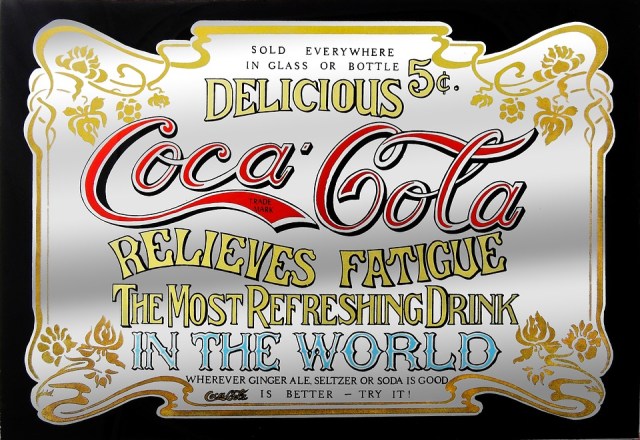
The main aim of advertising is to achieve a specific communication task with the targeted audience. To inform, persuade and remind. (1) Advertisers accomplish this in different kinds of ways. Some brilliant, heartwarming and wholesome. Some a little (or a lot!) less palatable.
Sometimes advertisers want to pass across a message in a subtle way. They use subliminal messages and stimuli in form of words, shapes or colors designed to pass below the normal threshold of perception. It could be a fleeting, split second image or one that is hidden in plain view and perceived subconsciously or at a second, closer glance. Ultimately, its purpose is to enable the consumer make the desired association between the product or brand and a particular meaning.
Movies sometimes make these associations. Disney is particularly known for its controversial, alleged use of subliminal images in some its movies. The most well-known is from The Lion King, where the word “SEX “ is very briefly created in a cloud of dust for a split milli-second.
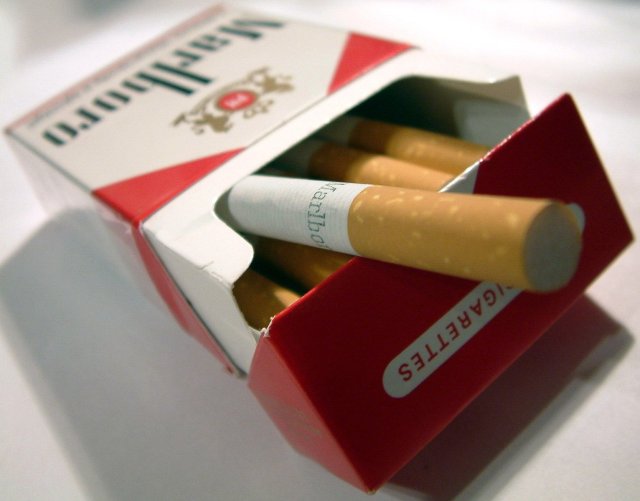
Brands sometimes use subliminal images to circumvent bans or restrictions placed on the advertising of their products. The ban on tobacco advertising resulted in Marlboro coming up with a clever way of getting around it. Sponsors of Ferrari’s Formula One team, they simulated a Marlboro packet by painting a bar code on the side of a red Ferrari. With the colour matching Marlboro’s brand colors, the shape and look of the barcode in comparison with the lower half of the Marlboro cigarette packet, the association was inevitable.
Some advertisers claim the images are happy (and convenient) coincidences, while some admit a deliberate and clever creativity. Some also allege sabotage. In 1999 Disney recalled home video versions of their 1977 animated feature, The Rescuers, due to an “objectionable background image” contained in one of the scenes: as the rodent heroes fly through the city, an image of a topless woman can be clearly seen in the window of a building in the background. Disney claimed sabotage and insisted the images were inserted during the post-production process by unknown hands. Skeptics wondered why Disney chose that time to make the recall and bring it to public notice, over twenty years after the fact. Unlike previous rumours about the titillating images in some of their recent animated features, The Rescuers was not well known and the images only appeared in the home video versions. (2) Disney seemed to be creating the controversy themselves, leading to suggestions that it was an attempt to boost the sales of the low-selling video.
Researchers claim that subliminal advertising really does work, asserting that people subconsciously respond to brief, flashed images or messages, which changes their thinking. They discovered that this was particularly effective with negative messages. (3)
But one does wonder: are stimuli that are too brief to be noticed consciously by the consumer, effective in getting a person to go shopping for that product? Or could the advertisers just be creating controversy to draw attention and get people talking more about their brand? Some people would say, it comes down to the same thing!
REFERENCES
- Colley, R. H., Defining Advertising Goals for Measured Advertising Results, New York: Association of National Advertisers, 1961
- ‘Did a Topless Woman Appear in Disney’s ‘The Rescuers’?’ https://www.snopes.com/fact-check/the-rescuers/
- ‘Subliminal advertising really does work, scientists claim’ https://www.telegraph.co.uk/news/science/science-news/6232801/Subliminal-advertising-really-does-work-claim-scientists.html
 hammersandflowers
Thanks for your blog! You showed me the justification that the subliminal message in advertisement really works. I though it do not have impact on customers when our teachers said that the result of the experiment was coined by James Vicary. However, Since I read your blog, You made me review the relevant materials.
I found a material that a controlled trials to measure the impact subliminal ad of a brand of a drink to the people who have different degree of habit to drink this and another brand of drinks. It found out that if a person do not have a fixed habit to by the second brand of drink, the more subliminal ads the person perceived, the more likely the person chose the first brand more than he or she used to. So the experiment attests that the subliminal ads really has influence to people (Verwijmeren, et al. , 2011).
Although many other papers prove that it can not influence customers behaviour (Broyles, 2006)
, now I still believe it can have some more or less influence to people. It really result in some ethical problems since most people do not want to be seakingly manipulated by others.
reference:
Verwijmeren, T., Karremans, J. C., Stroebe, W., & Wigboldus, D. H. (2011). The workings and limits of subliminal advertising: The role of habits. Journal of Consumer Psychology, 21(2), 206-213.
Broyles, S. J. (2006). Subliminal advertising and the perpetual popularity of playing to people’s paranoia. Journal of Consumer Affairs, 40(2), 392-406.
LikeLike